Whole vs Ground Spices How Grinding Changes Flavor, Aroma, and Shelf Life
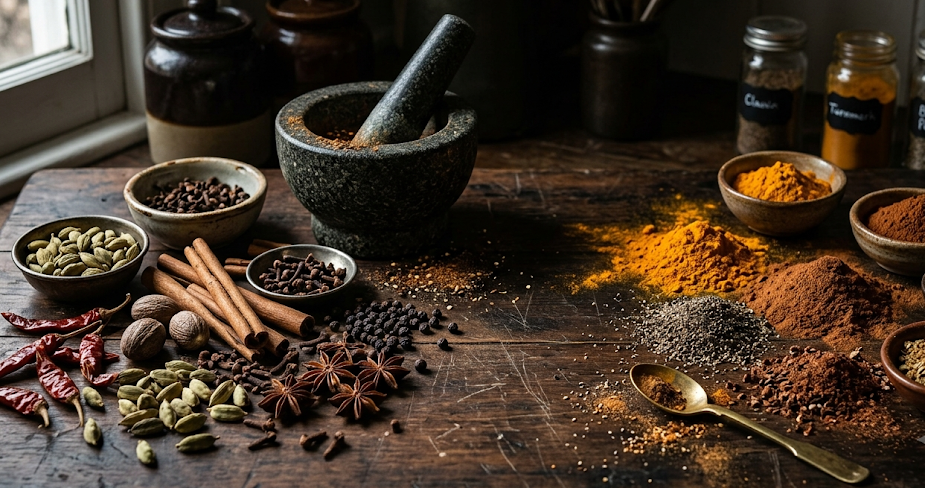
CULINARY SCIENCE • INGREDIENTS • KITCHEN TECHNIQUES The Science of Freshly Ground Spices Why a pinch of freshly crushed pepper can smell dramatically different from the same spice that has been sitting in a jar for months. AROMA CHEMISTRY SPICE STORAGE COOKING METHODS Open a jar of ground black pepper, then crush a few whole … Read more

Oleoresin & Essential Oil Extraction: Supercritical CO2, Hydrodistillation, and Standardization

While whole and ground dried spices remain foundational to household kitchens and artisan culinary crafts, the modern industrial food manufacturing sector operates overwhelmingly on concentrated botanical extracts: Spice Oleoresins and Steam-Distilled Essential Oils. From carbonated beverages and snack food seasonings to canned soups, confectionery, pharmaceuticals, and cosmetics, food technologists require flavoring ingredients that guarantee absolute … Read more

Decontamination Technologies: Steam Sterilization, Ionizing Radiation, and Ethylene Oxide Safety

In modern industrial food manufacturing, dry culinary spices occupy a paradoxical safety status. While naturally rich in potent secondary antimicrobial metabolites—such as eugenol in cloves, thymol in ajwain, and cinnamaldehyde in cinnamon—raw unprocessed spices represent one of the most hazardous microbial contamination vectors in the entire global food supply chain. Grown in open tropical soils, … Read more

Industrial Milling & Cryogenic Grinding: Preventing Thermal Dissipation of Essential Oils

In industrial food processing and spice manufacturing, milling is far more than a simple mechanical reduction of particle size. The structural anatomy of whole spices—whether the lignified woody barks of cinnamon, the dense oil-bearing endosperms of nutmeg, or the delicate ribbed vittae canals of cumin—is an evolutionary fortress engineered to sequester volatile essential oils from … Read more

Post-Harvest Drying, Curing, and Fermentation: Preserving Volatiles and Precursor Enzymes

The culinary and aromatic identity of spices is not forged in the field alone. While agricultural terroir, soil mineralogy, and genetic varietals dictate the baseline synthesis of plant secondary metabolites, the final sensory quality, microbial safety, and market value of commercial spices are overwhelmingly determined by Post-Harvest Processing Technologies. Between the moment a fresh green … Read more