How to Build a Balanced Spice Blend Base Flavors, Heat, and Aromatic Accents

THE SPICE ATELIER   /   FLAVOR COMPOSITION Nº 01 The Art of Layering Spices into a Balanced Blend A practical guide to creating depth, controlling heat, and choosing aromatic finishing notes—without letting one ingredient overwhelm the others. FOUNDATION WARMTH & HEAT AROMATIC FINISH A memorable spice blend is rarely created by adding as many … Read more
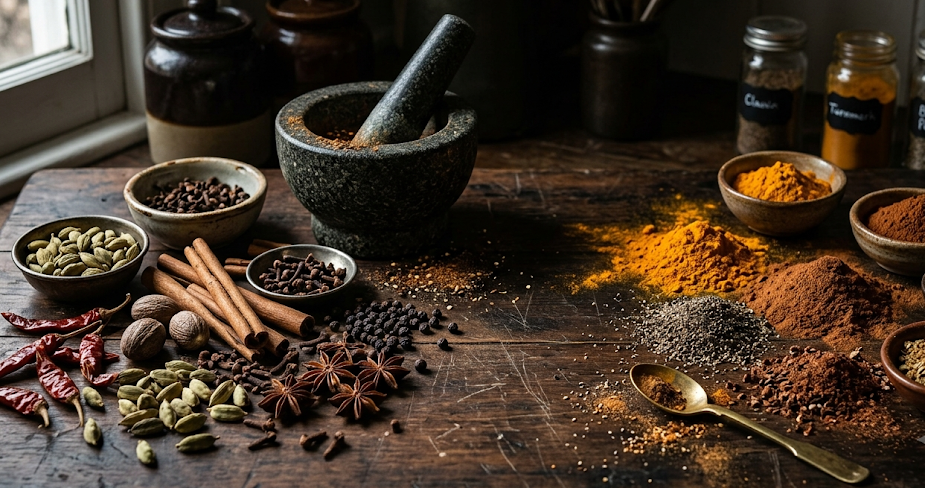
Whole vs Ground Spices How Grinding Changes Flavor, Aroma, and Shelf Life

CULINARY SCIENCE • INGREDIENTS • KITCHEN TECHNIQUES The Science of Freshly Ground Spices Why a pinch of freshly crushed pepper can smell dramatically different from the same spice that has been sitting in a jar for months. AROMA CHEMISTRY SPICE STORAGE COOKING METHODS Open a jar of ground black pepper, then crush a few whole … Read more

Why Black, White, and Green Peppercorns Come from the Same Plant

BOTANICAL FIELD NOTES · SPICE SCIENCE · NO. 01 Piper nigrum One Climbing Vine.Three Familiar Spices. Black, white, and green peppercorns may look and taste different, but their story begins with the same tropical pepper plant. HARVEST TIMING   /   PROCESSING   /   FLAVOR DEVELOPMENT Open a spice cabinet and you may find … Read more

Ceylon vs Cassia Cinnamon How to Tell Them Apart and Use Each in Cooking

THE SPICE MERCHANT’S NOTEBOOK / KITCHEN INGREDIENTS Two Cinnamon Traditions, Two Distinct Flavor Experiences Learn how to recognize Ceylon and Cassia cinnamon, understand their flavor differences, and choose the right variety for baking, beverages, and savory cooking. SPICE IDENTIFICATION   •   FLAVOR   •   COOKING   •   STORAGE Cinnamon is one of … Read more

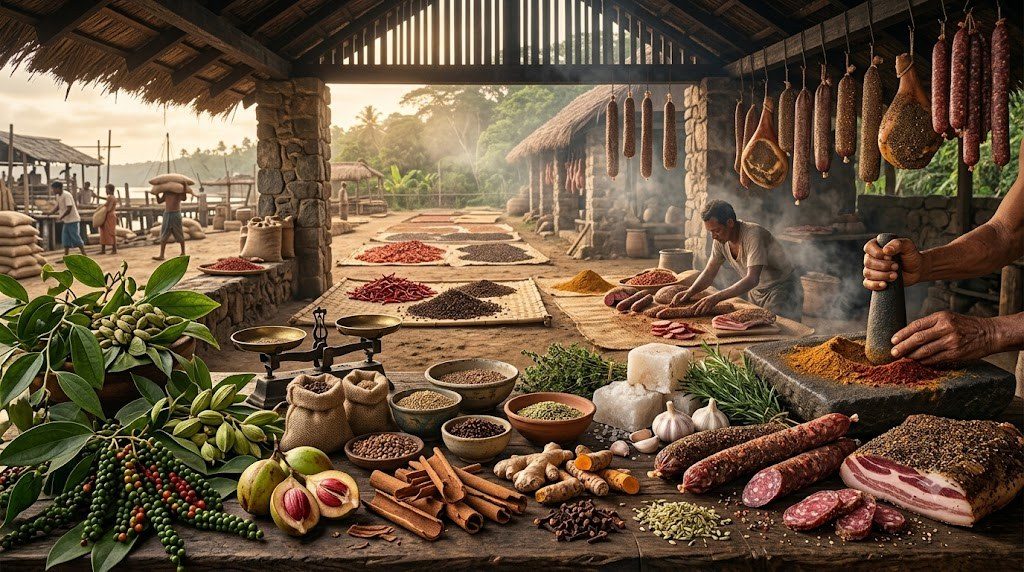
Spice Preservation and Charcuterie: The Antimicrobial Science of Phenolics and Lipid Stabilization

For millennia before the advent of mechanical refrigeration, artificial chemical preservatives, and hermetic vacuum packaging, human civilization relied on an intricate synergy between culinary spices, mineral salts, and fermentation biology to prevent perishable animal proteins from succumbing to deadly putrefaction. From classical Roman salted sausages and medieval Venetian spice-cured hams to Central European charcuterie, Mediterranean … Read more

Sweet Spice Applications: Baking, Confectionery Chemistry, and Retronasal Flavor Synergy

In global culinary science, the classification of certain botanical aromatics as ‘sweet spices’ represents a fascinating psycho-sensory paradox. Strictly speaking, botanicals such as cinnamon, nutmeg, cloves, allspice, vanilla, and green cardamom contain negligible monosaccharides or disaccharides; their caloric carbohydrate content is near zero. Yet across centuries of European, Middle Eastern, and American confectionery and baking … Read more

Whole vs. Ground Spices: Mass Transfer Diffusion, Broth Clarification, and Temporal Flavor Staging

In both the professional culinary arts and industrial food processing, the structural form of an aromatic spice—whether deployed as an intact botanical organ or milled into micro-pulverized particulate powder—dictates every thermodynamic, kinetic, and sensory dimension of the cooking process. The debate between whole versus ground spices is not a matter of aesthetic preference or convenience; … Read more

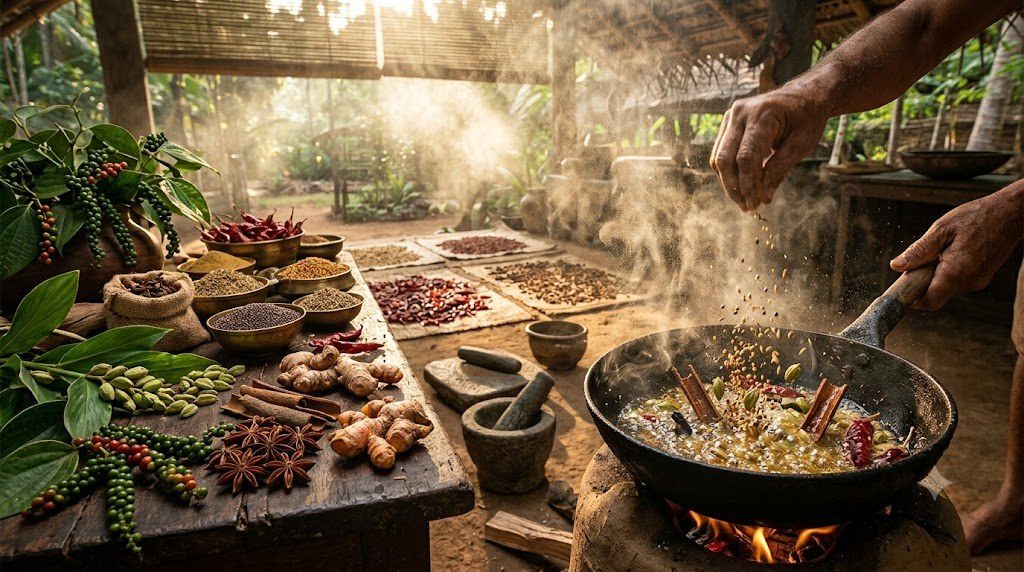
The Physics of Blooming Spices in Fat: Lipid Solubilization, Tadka Kinetics, and Aerosolization

In the culinary sciences, few operational techniques fundamentally transform food biochemistry as dramatically as the thermal extraction of whole and ground spices into hot culinary fats. Known across the Indian subcontinent as Tadka, Chhonk, Baghar, or Talikka, and widely referred to in Western professional kitchens as blooming or tempering, this process represents far more than … Read more

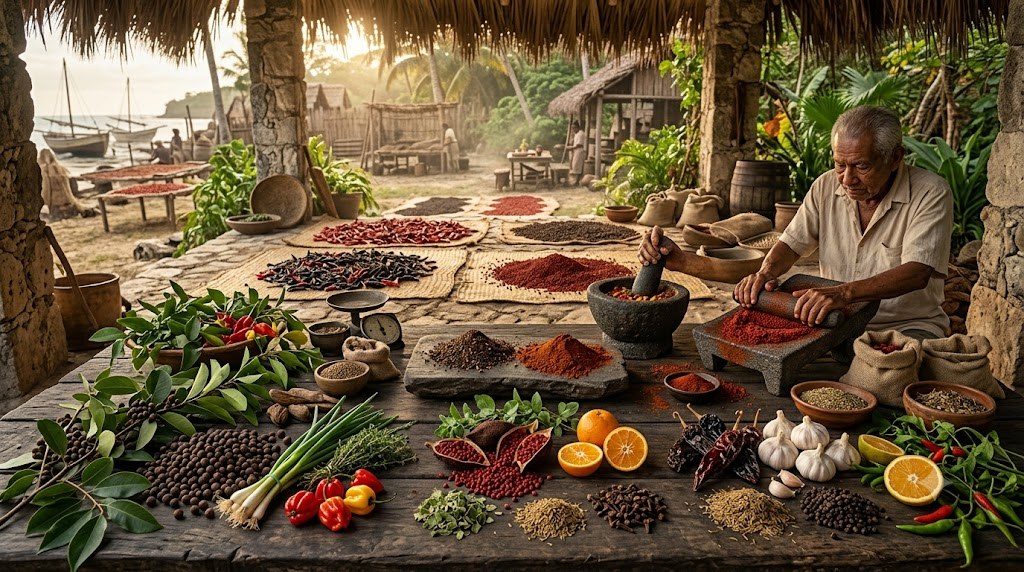
Caribbean and Latin American Master Blends: Jamaican Jerk, Yucatecan Recado Rojo, and Adobo Dynamics

The culinary landscapes of the Caribbean basin and Latin America represent some of the most dynamic intersections of indigenous botanical heritage, transatlantic trade routes, and complex volatile chemistry. Across these tropical terroirs, iconic seasoning blends—ranging from fiery Jamaican jerk rubs and deep ruby Yucatecan recado rojo to versatile Puerto Rican adobo and Brazilian tempero baiano—were … Read more

East Asian Spice Alchemy: Five-Spice, Shichimi Togarashi, and Sichuan Peppercorn Dynamics

East Asian spice traditions embody sophisticated philosophical, physiological, and chemical frameworks that harmonize bold flavor volatiles with neurochemical sensory stimuli. Far from simple flavor boosters, classic East Asian spice blends such as Chinese five-spice powder (Wǔxiāngfěn) and Japanese seven-spice blend (Shichimi Togarashi) were engineered around centuries-old concepts of metabolic equilibrium, five-element cosmic balance, and intricate … Read more