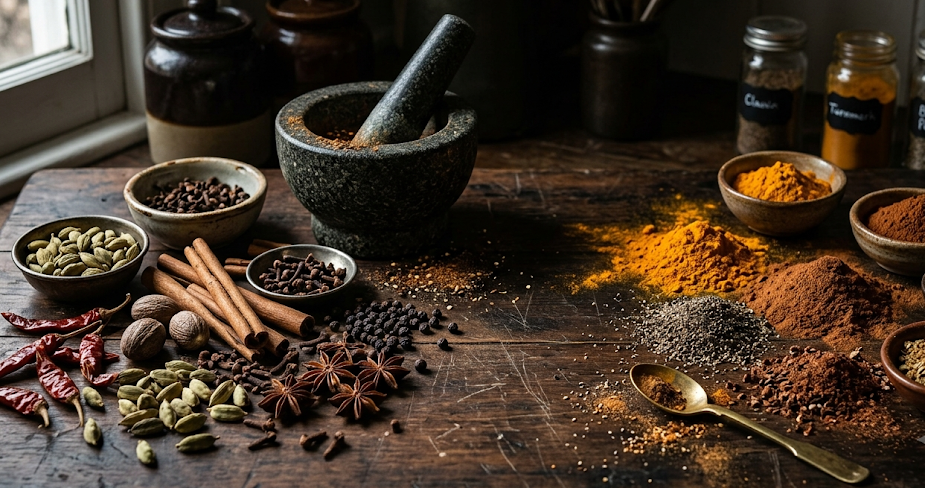
In global culinary science, the classification of certain botanical aromatics as ‘sweet spices’ represents a fascinating psycho-sensory paradox. Strictly speaking, botanicals such as cinnamon, nutmeg, cloves, allspice, vanilla, and green cardamom contain negligible monosaccharides or disaccharides; their caloric carbohydrate content is near zero. Yet across centuries of European, Middle Eastern, and American confectionery and baking traditions, these spices evoke profound perceptions of sweetness, comfort, and warmth in the human brain. This phenomenon is rooted in cross-modal sensory integration, retronasal olfaction conditioning, and sugar-volatile synergy.
When sweet spices are integrated into baked goods, pastries, custards, and chocolate confectionery, they are subjected to intense thermal regimes (150°C to 220°C), dense starch-gluten networks, and lipid-sugar emulsions. Understanding the thermal stability of cinnamaldehyde, the volatilization kinetics of eugenol and myristicin, the hydrophobic encapsulation of vanillin, and the role of spice antioxidants in retarding lipid staling in bakery products is essential for pastry chefs, food scientists, and commercial bakers aiming for perfection.
1. The Neurochemistry of ‘Sweetness’ Perception Without Sugar
Human perception of taste is biologically divided between the tongue’s gustatory receptors (which detect sweet, sour, salty, bitter, and umami via GPCRs like T1R2/T1R3) and the olfactory bulb’s odorant receptors located in the nasal epithelium. When we chew a spiced baked item, chewing movements pump air from the oral cavity into the pharynx and up into the nasal cavity—a process termed retronasal olfaction.
Certain volatile molecules trigger cross-modal sweet enhancement:
- Cinnamaldehyde (Cinnamon / Cassia): Activates TRPA1 receptors while simultaneously stimulating olfactory glomeruli heavily associated through cultural and evolutionary conditioning with ripe fruits and sugar-dense baked goods. In sensory trials, adding 0.1% ground cinnamon to a sucrose solution allows bakers to reduce physical sugar content by 15% to 20% without subjects perceiving any loss in perceived sweetness.
- Vanillin (Vanilla Bean / Extract): An aromatic aldehyde (4-hydroxy-3-methoxybenzaldehyde) that acts as the global gold standard of sweet aroma conditioning. Vanillin binds to olfactory receptors that trigger dopamine release in the brain’s reward centers, softening harsh acidic notes in dairy and chocolate.
- Eugenol (Cloves / Allspice): Provides a deep, numbing, phenolic foundation that, when paired with sucrose, suppresses bitter off-notes from roasted cocoa or whole wheat flour.
- 1,8-Cineole and Terpinyl Acetate (Cardamom): Deliver eucalyptus-floral camphoraceous notes that lift dense, heavy butter-and-sugar matrices in Scandinavian cardamom buns (Kardemummabullar) and Middle Eastern sweets.
2. Baking Thermal Dynamics: Crumb Protection vs. Crust Stripping
Baking places immense thermal demands on volatile aromatic compounds. An oven operating at 180°C to 200°C creates two fundamentally disparate thermal zones within a loaf of gingerbread, speculoos cookie, or spiced fruitcake:
The Exterior Crust Zone: The outer crust reaches temperatures exceeding 150°C to 170°C, driving surface water evaporation and intense Maillard browning. However, this extreme dry heat causes rapid flash-evaporation and thermal pyrosynthesis of surface spice volatiles. Delicate monoterpenes on the exterior are largely stripped away into the oven airflow, while surface cinnamaldehyde partially oxidizes into cinnamic acid.
The Internal Crumb Zone: Inside the dough or batter, abundant liquid water maintains an internal crumb temperature strictly capped at 98°C to 100°C throughout the entire baking cycle. The hydrating starch granules gelatinize, and egg/gluten proteins coagulate, forming a dense, porous cellular matrix. This starch-protein network physically entraps high-boiling sweet spice molecules (cinnamaldehyde, eugenol, myristicin), preserving up to 85% of the original volatile payload until the bread is sliced and chewed.
3. Classical Confectionery Blends: Speculoos, Lebkuchen, and Pumpkin Spice
Over centuries, European and American baking traditions evolved specialized sweet spice formulas, each calibrated to specific dough hydration levels, fat percentages, and storage requirements:
- Dutch Speculoos / Belgian Speculaas: A thin, crunchy shortcrust cookie formulated with brown sugar (Candi sugar rich in molasses), heavy butter, and a spice blend dominated by cinnamon (60%), followed by nutmeg, cloves, white pepper, ginger, and cardamom. The presence of white pepper provides a delayed, throat-warming piperine finish that balances rich caramel sugars.
- German Lebkuchen / Gingerbread: Formulated around rye flour and invert honey syrup. In the absence of butterfat, Lebkuchen relies on an intense spice blend of cinnamon, cloves, allspice, coriander seed, star anise, and mace. The honey’s low pH and natural hygroscopic moisture retention keep the spiced cake tender for months.
- American Pumpkin Pie Spice: A modern commercial standard balancing cinnamon (dominant cinnamaldehyde), ginger (zingiberene/shogaols), nutmeg (myristicin warmth), allspice (eugenol bridge), and cloves. Formulated specifically to cut through heavy, rich, sulfurous egg-and-squash custards without overpowering subtle squash notes.
| Baking Spice Blend | Dominant Volatiles | Primary Sugar Partner | Leavening Interaction | Key Structural Role |
|---|---|---|---|---|
| Speculoos (Dutch/Belgian) | Cinnamaldehyde, Eugenol, Piperine | Dark brown Candi sugar / molasses | Baking powder (neutral pH) | Delivers lingering crisp warmth to caramelized butterfat |
| German Lebkuchen | Eugenol, Anethole, Zingiberene | Invert honey syrup | Potassium carbonate (Hirschhornsalz) | Preserves soft crumb hygroscopicity over multi-month aging |
| Pumpkin Pie Spice | Cinnamaldehyde, Myristicin, Eugenol | Granulated sucrose & evaporated milk | None (baked egg custard matrix) | Cuts through rich dairy fats and vegetal squash starches |
| Pain d’Épices (French) | Trans-Anethole, Cinnamaldehyde | Buckwheat / Chestnut honey | Sodium bicarbonate | Floral, licorice-scented sponge crumb with zero added butter |
| Nordic Cardamom Buns | Terpinyl Acetate, 1,8-Cineole | Pearl sugar & cultured butter | Active dry yeast (biological) | Camphoraceous, citrus-floral lift to enriched wheat dough |
4. Dairy and Fat Emulsions: Custards, Ice Creams, and Chocolates
When sweet spices are utilized in cold or fat-heavy confections—such as egg custards (crème brûlée), ice cream bases, and chocolate ganaches—their hydrophobic properties dictate extraction technique:
Hot Dairy Infusion: Essential oils in whole vanilla beans, cinnamon bark, and cracked cardamom pods are virtually insoluble in cold milk. However, when milk or cream is heated to 80°C to 85°C, milk fat globules undergo partial membrane liquefaction. The hydrophobic spice volatiles partition directly into the microscopic lipid globules. Steeping whole spices off the heat for 20 to 30 minutes in warm cream achieves profound aromatic extraction without boiling away delicate floral terpenes.
Chocolate Synergy and Eugenol Masking: In artisan chocolate production, dark cocoa contains bitter polyphenols (theobromine, catechin polymers) that can challenge certain palates. Micro-dosing warm sweet spices—particularly cassia cinnamon, nutmeg, and vanilla—creates an aromatic mask that binds retronasally, tricking the brain into perceiving smoother, fruitier, and less astringent chocolate profiles.
5. Antioxidant Preservation: Preventing Rancidity in Bakery Lipids
Beyond flavor, sweet baking spices act as potent, natural biochemical preservatives. Bakery products containing high butter, lard, or vegetable shortening percentages are prone to oxidative rancidity, wherein atmospheric oxygen attacks unsaturated fatty acid double bonds, producing foul hexanals and peroxides.
Spices in the sweet category—especially cloves, cinnamon, allspice, and nutmeg—rank among the highest oxygen radical absorbance capacity (ORAC) botanicals on Earth. Cloves contain over 15% eugenol, an exceptionally strong phenolic hydrogen donor that halts free-radical propagation in fats. Integrating authentic sweet spices into artisan cookies, fruitcakes, and pastries extends ambient shelf life by several weeks without the need for synthetic chemical antioxidants like BHT or BHA.
Frequently Asked Questions (FAQ)
Q: Why is Ceylon cinnamon preferred over Cassia in delicate French and pastry baking?
Ceylon cinnamon (true cinnamon) contains significantly lower coumarin levels and delivers a subtle, complex, floral-citrus aromatic profile driven by linalool alongside cinnamaldehyde. Cassia is far more intense, woody, and pungent, which can easily overpower delicate butter pastry creams.
Q: Why do bakers add spices to the cream rather than directly into the flour for custards?
The primary flavor compounds in spices (vanillin, cinnamaldehyde, eugenol) are hydrophobic and dissolve far more effectively into the fat phase of warm dairy cream than into aqueous or dry starch phases, guaranteeing uniform silky mouthfeel.
Q: What causes a spiced cake to turn gummy when too much cinnamon is added?
Ground cinnamon bark contains significant quantities of soluble mucilage and polysaccharides (pectin-like gums). When over-dosed, these mucilages compete with flour starches for water during baking, resulting in a dense, gummy, unrisen crumb structure.
Q: How does whole nutmeg compare to pre-ground nutmeg in sweet desserts?
Whole nutmeg contains high levels of fragile volatile ethers (myristicin, safrole, elemicin) that evaporate rapidly once ground. Freshly grating whole nutmeg immediately onto an eggnog or custard delivers an intoxicating, sweet, musky aroma impossible to replicate with stale pre-ground powder.
Q: Why is salt essential in sweet spiced baked goods like gingerbread?
Sodium ions bind to taste receptors on the tongue, suppressing background bitter tannins found in molasses and heavy spices while heightening the brain’s sensitivity to sucrose and aromatic aldehydes like cinnamaldehyde and vanillin.
Q: Can vanilla extract be boiled vigorously during caramel or candy making?
No. Commercial vanilla extract has an alcohol base, and natural vanillin starts volatilizing rapidly at temperatures above 70°C. Adding vanilla extract at the very end of candy cooking—after removing the pot from direct heat—preserves delicate aromatic esters.
Q: What is the role of mace in traditional English sweet mincemeat and baking?
Mace is the lacy aril surrounding the nutmeg seed. It contains higher concentrations of sabinene and myrcene, imparting a lighter, more citrusy, and elegant floral-nutmeg profile that pairs exquisitely with dried currants, citrus peel, and apples.
Q: Why does cardamom feature so prominently in Scandinavian baking compared to other European cuisines?
Moorish traders and Byzantine Vikings introduced cardamom to Northern Europe during the medieval era. Scandinavian bakers discovered that its eucalyptus-like terpinyl acetate cut through dense winter rye doughs and rich butterfat, establishing a cherished cultural staple in Sweden and Finland.
Q: Does ground clove darken the color of cake batters?
Yes. Ground cloves contain concentrated polyphenolic tannins and pigments that oxidize during baking, imparting a rich, dark mahogany or brown tint to gingerbreads, spiced apple cakes, and spice cookies.
Q: Why are whole star anise pods often steeped in poaching syrups for pears?
Star anise carpels slowly release sweet trans-anethole and shikimic acid into warm sucrose syrup without disintegrating or clouding the liquid, perfuming poached pears with a sophisticated, crystalline licorice sweetness.
Q: How do sweet spices interact with yeast during bread fermentation?
Certain sweet spices—notably cinnamon and cloves—possess powerful antimicrobial properties due to high cinnamaldehyde and eugenol contents. Over-dosing cinnamon in sweet brioche dough can severely retard or kill yeast fermentation; bakers often swirl cinnamon inside the rolled dough rather than mixing it directly into the initial yeast sponge.
Q: What is the difference between pure vanilla extract and artificial vanillin in baked goods?
Pure vanilla extract contains over 250 volatile aroma compounds alongside vanillin, producing a complex, floral, woody, and raisin-like bouquet. Synthetic vanillin contains pure chemical vanillin alone, which performs robustly at high baking temperatures but lacks delicate background nuance.
Q: Can ground allspice be used as an exact one-to-one substitute for a mix of cinnamon, nutmeg, and cloves?
Yes. In fact, allspice (Pimenta dioica) received its English name specifically because its natural essential oil profile combines the characteristic volatile sensations of cinnamon, nutmeg, and cloves in a single dried berry.
Q: Why do gingerbread cookies improve in flavor and texture after a week of storage?
During aging, invert sugars in molasses and honey absorb ambient moisture (hygroscopic equilibration), softening the cookie structure. Concurrently, fat-soluble spice volatiles slowly diffuse and equilibrate throughout the matrix, harmonizing sharp edges into a mellow, unified bouquet.