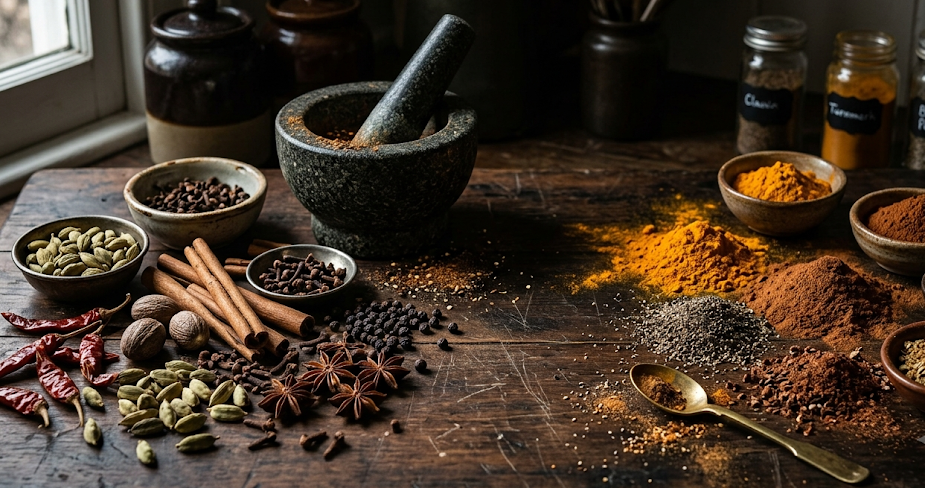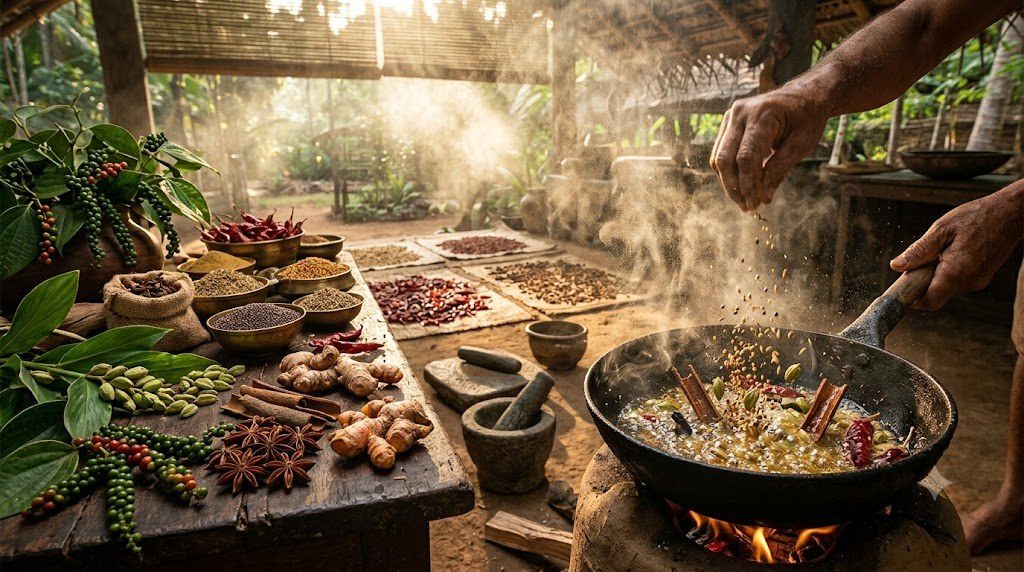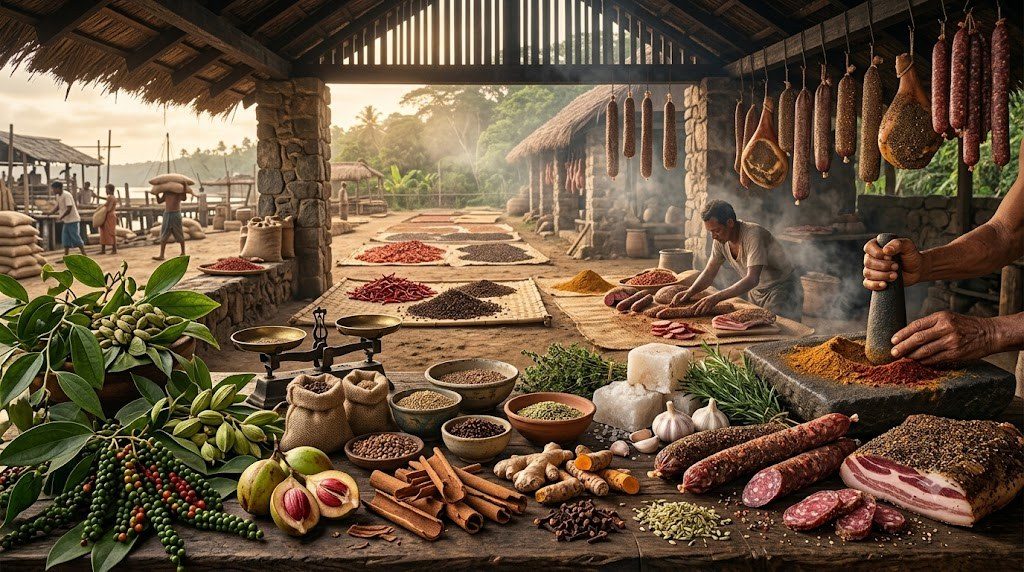
For millennia before the advent of mechanical refrigeration, artificial chemical preservatives, and hermetic vacuum packaging, human civilization relied on an intricate synergy between culinary spices, mineral salts, and fermentation biology to prevent perishable animal proteins from succumbing to deadly putrefaction. From classical Roman salted sausages and medieval Venetian spice-cured hams to Central European charcuterie, Mediterranean salami, and Scandinavian gravlax, spices served as vital pharmacological weapons in the war against foodborne microbial pathogens.
In modern meat science and food microbiology, the historic role of spices in meat preservation is now fully understood through the lens of phenolic membrane disruption, proton-motive force decoupling, antioxidative lipid stabilization, and selective probiotic fermentation promotion. Far from merely masking the unpleasant odors of decaying flesh—a common historical misconception—botanicals like black pepper, cloves, mustard seed, garlic, rosemary, and juniper berries act as precision biostatic agents that inhibit lethal pathogens like Clostridium botulinum, Listeria monocytogenes, and Salmonella enterica while allowing beneficial lactic acid bacteria to flourish.
1. The Mechanisms of Phenolic Antimicrobial Action
The potent antimicrobial efficacy of culinary spices is concentrated primarily within their essential oil fractions, dominated by volatile phenolics, terpenes, aldehydes, and organosulfur compounds. When pathogenic bacterial cells come into contact with spice extracts in a curing meat matrix, these molecules exert cytotoxic and biostatic effects via three distinct biochemical mechanisms:
- Phospholipid Bilayer Permeabilization: Lipophilic molecules such as eugenol (cloves/allspice), thymol (thyme/ajwain), and carvacrol (oregano) dissolve directly into the hydrophobic interior of bacterial cytoplasmic membranes. This causes physical swelling and disruption of fatty acyl chains, dramatically increasing membrane permeability.
- Decoupling of Proton-Motive Force: As membrane integrity fails, essential intracellular ions—primarily potassium (K+), magnesium (Mg2+), and adenosine triphosphate (ATP)—leak uncontrollably out of the cell, while extracellular protons rush in. This collapses the transmembrane electrical potential and trans-membrane proton gradient, depriving the pathogen of the metabolic energy required to maintain cellular homeostasis.
- Enzyme Inactivation and Protein Denaturation: Reactive functional groups—such as the allyl isothiocyanates in mustard and the allicin in garlic—form covalent disulfide bonds with sulfhydryl ($-SH$) groups of crucial microbial metabolic enzymes (including dehydrogenases and RNA polymerases), permanently halting cellular respiration and cell division.
2. Salami Fermentation: Selective Symbiosis with Lactic Acid Bacteria
In the production of dry-cured fermented sausages (such as Italian Salame di Felino, Hungarian Téliszalámi, and Spanish Chorizo), spices must accomplish a remarkably delicate microbiological balancing act: they must exterminate pathogenic spoilage bacteria without killing beneficial starter cultures (Lactobacillus sakei, Lactobacillus curvatus, and Staphylococcus xylosus).
Fortunately, evolutionary biology provides a profound biochemical disparity: beneficial lactic acid bacteria (LAB) possess intrinsically higher resistance to phenolic spice compounds compared to Gram-negative pathogens and spore-forming bacilli. LAB possess dense, heavily cross-linked peptidoglycan cell walls and specialized active efflux pumps capable of ejecting lipophilic terpene molecules before they compromise the inner membrane.
Consequently, incorporating black pepper, white pepper, garlic, and sweet paprika into raw minced sausage meat actively suppresses pathogenic competitors, granting LAB a decisive ecological monopoly. The thriving LAB ferment meat glycogen into lactic acid, rapidly driving the pH down from 5.8 to below 4.8. This acidification coagulates meat myofibrillar proteins into a firm sliceable texture, eliminates residual pathogens, and activates indigenous proteases that generate complex savory peptides.
3. Retarding Lipid Peroxidation: The Antioxidant Defense of Spices
A primary failure mode of long-cured charcuterie—such as prosciutto, jamón ibérico, and pancetta—is not bacterial putrefaction, but rancidification. As meat hangs in drying chambers for 12 to 36 months, atmospheric oxygen reacts with polyunsaturated fatty acids in porcine adipose tissue, producing noxious aldehydes, ketones, and lipid hydroperoxides that cause sour, warmed-over, paint-like off-flavors.
Spices contain exceptional concentrations of natural polyphenolic antioxidants that function as free-radical chain-breaking scavengers:
- Rosemary & Sage: Contain concentrated carnosic acid and rosmarinic acid. These diterpenes donate hydrogen atoms to neutralize peroxy radicals before they can attack fatty acid double bonds, extending lipid shelf life up to 400% compared to unspiced control meats.
- Black & White Pepper: Piperine and its companion sesquiterpenes act as primary singlet oxygen quenchers, protecting vulnerable fat caps on cured bresaola and guanciale.
- Juniper Berries: Rich in antioxidant biflavonoids and monoterpene hydrocarbons, juniper shields dense game meats (venison, wild boar prosciutto) from auto-oxidation during prolonged cellar aging.
| Botanical Preservative | Key Active Compound | Target Pathogen / Mechanism | Charcuterie / Curing Application |
|---|---|---|---|
| Whole / Cracked Black Pepper | Piperine, Beta-Caryophyllene | Synergizes with salt to rupture microbial walls; quenches fat oxidation | Italian Salame, Pastrami bark, Pancetta arrotolata |
| Dried Cloves & Allspice | Eugenol (phenolic aldehyde) | Massive membrane lysis of Listeria monocytogenes; halts Clostridium outgrowth | Corned beef pickling brines, Swedish Christmas ham |
| Fresh Crushed Garlic | Allicin, Diallyl Disulfide | Covalently bonds to bacterial enzyme -SH groups; terminates cellular respiration | Spanish Chorizo, Polish Kielbasa, Italian Salami |
| Smoke-Dried Paprika | Capsanthin, Guaiacol (from smoke) | Wood-smoke phenolics act as bactericides; carotenoids stop rancidity | Spanish Chorizo de Cantimpalos, Pimentón lomo |
| Brown Mustard Seed | Allyl Isothiocyanate / Sinigrin | Hydrolyzes to release broad-spectrum volatile vapor phase antimicrobial | European pickling brines, cured beef pastrami |
| Dried Juniper Berries | Alpha-Pinene, Terpinen-4-ol | Suppresses psychrotrophic putrefactive molds on exterior casings | Tyrolean Speck, Venison salami, German ham curing |
4. Pickling Brines and Acid-Salt-Spice Synergies
In wet curing and pickling systems—such as corned beef, pastrami brines, and pickled pork cuts—preservation is achieved through a multi-hurdle chemical system known in food science as Leistner’s Hurdle Technology:
- Hurdle 1 (Osmotic Pressure): High sodium chloride concentrations (typically 4% to 8% in brine) lower water activity ($a_w$) below 0.92, dehydrating bacterial cells through extreme osmotic water egress.
- Hurdle 2 (Chemical Nitrite / Nitrate): Sodium nitrite ($NaNO_2$) actively suppresses the germination of dormant Clostridium botulinum endospores and stabilizes meat myoglobin into cured nitric-oxide hemochrome (pink curing color).
- Hurdle 3 (The Spice Hurdle): Pickling spice blends—combining allspice, cloves, coriander, bay leaf, mustard seed, and ginger—are simmered in the brine. The heat extracts lipophilic eugenol, linalool, and isothiocyanates into aqueous emulsion droplets. These volatiles penetrate deep into the interior muscle fibers alongside the salt ions, providing localized antimicrobial biocidal coverage that halts deep-tissue anaerobic spoilage.
5. Modern Clean-Label Charcuterie and Natural Nitrate Alternatives
In modern industrial meat processing, consumer demand for ‘clean-label’ and nitrite-free charcuterie has sparked a major renaissance in botanical spice science. Instead of synthetic chemical additives, manufacturers increasingly utilize standardized vegetable and spice extracts to achieve both preservation and color development:
Cultured celery powder (rich in naturally occurring nitrates) is co-inoculated with specialized nitrate-reducing bacterial starter cultures to generate natural curing nitrites in situ. Simultaneously, concentrated oleoresins of rosemary, green tea, and acerola cherry are incorporated into the meat matrix. The carnosic acid in rosemary and ascorbic acid in acerola act as powerful curing accelerators and antioxidant barriers, providing commercial charcuterie with shelf lives exceeding 180 days while relying entirely on clean, botanical preservation chemistry.
Frequently Asked Questions (FAQ)
Q: Did historical civilizations use spices primarily to disguise spoiled meat?
No. Spices were among the most expensive luxury commodities on Earth during the antiquity and medieval eras. Anyone wealthy enough to purchase black pepper, cloves, or saffron could easily afford fresh meat; spices were used for their medicinal, digestive, and active preservative antimicrobial properties.
Q: Why is cracked black pepper coated heavily onto pastrami before smoking?
The coarse crust of black pepper (pastrami bark) provides a physical, antimicrobial, and antioxidant shield that protects the meat’s surface during 10 to 14 hours of hot smoking, while piperine binds to rendered fat to create a deeply flavorful bark.
Q: How do mustard seeds inhibit mold and bacterial growth in pickling jars?
Mustard seeds contain glucosinolates (sinigrin) that, when crushed or hydrated in water, interact with the enzyme myrosinase to produce volatile allyl isothiocyanate. This volatile compound vaporizes into the headspace of the jar, sterilizing the air pocket above the liquid.
Q: Can spices alone preserve raw meat without salt or refrigeration?
No. While spices possess potent antimicrobial and antioxidant properties, they cannot sufficiently lower water activity (a_w) on their own. They must work synergistically with salt (osmotic dehydration), low pH (fermentation or vinegar), and temperature control to ensure absolute safety.
Q: Why is garlic considered one of the most powerful natural meat preservatives?
Freshly crushed garlic generates allicin, an organosulfur compound that readily crosses bacterial cell membranes and reacts with cellular sulfhydryl groups, disrupting essential respiratory enzymes in both Gram-positive and Gram-negative pathogens.
Q: What role does juniper berry play in smoking and curing European hams?
Juniper berries contain high levels of alpha-pinene and terpinenes. When burned in smoking sawdust or infused into wet curing brines, juniper volatiles inhibit surface mold growth while contributing a fresh, wild alpine pine aroma that cuts through cured pork fat.
Q: How does rosemary extract prevent the ‘warmed-over flavor’ in cooked and cured meats?
Warmed-over flavor is caused by the oxidation of membrane phospholipids during refrigeration. Carnosic acid and rosmarinic acid in rosemary intercept reactive oxygen species, completely halting lipid radical chain reactions and maintaining fresh-cooked meat flavors.
Q: Why do Spanish chorizos not require commercial chemical nitrates for short cures?
Traditional chorizos rely on the potent synergistic combination of high salt, rapid lactic acid fermentation, garlic allicin, and heavy doses of smoke-cured Pimentón de la Vera. The smoke phenolics and carotenoids provide robust natural protection against pathogen outgrowth.
Q: Can whole spices introduce bacterial contamination into cured meats?
Yes. Raw, unsterilized agricultural spices can harbor soil-borne bacterial spores (such as Bacillus cereus). In commercial charcuterie manufacturing, spices must be steam-sterilized or treated to guarantee microbial safety before being incorporated into raw meat emulsions.
Q: Why are cloves and allspice traditional in sweet pickling brines for pork?
Both spices are rich in eugenol, one of the most potent natural phenolic bactericides known. Eugenol is especially effective at halting the outgrowth of Listeria monocytogenes and psychrotrophic bacteria in cold, refrigerated brine environments.
Q: What is ‘Hurdle Technology’ in the context of spiced charcuterie?
Hurdle Technology refers to combining multiple sub-lethal preservative barriers—low water activity (salt), low pH (lactic acid), low temperature, and antimicrobial spice volatiles—such that pathogenic microbes cannot overcome all hurdles simultaneously, ensuring food stability.
Q: How does bay leaf contribute to the preservation of brined meats?
Bay leaves (Laurus nobilis) contain high concentrations of 1,8-cineole and eugenol. When simmered into curing brines, these volatiles infuse the muscle tissue, exerting continuous biostatic pressure against foodborne spoilage organisms during multi-day brining.
Q: Why is white pepper preferred over black pepper in French and Swiss cured sausages?
White pepper consists of ripe peppercorns with the dark outer pericarp removed. It provides sharp, clean piperine pungency without introducing unsightly dark black specks into pale pork and poultry sausage matrices (like Cervelat and Weisswurst).
Q: How do essential oil volatile vapors protect dry sausages during cellar curing?
As cured sausages hang in drying rooms, the essential oils in spices continuously volatilize through the natural casing. This creates an invisible, hydrophobic antimicrobial vapor envelope around the sausage, preventing environmental airborne molds from penetrating the interior.
Q: What is the role of coriander seeds in German Bratwurst and corned beef curing?
Coriander seeds contain high concentrations of linalool and geraniol, which provide gentle floral-citrus balance while exerting synergistic antimicrobial action against psychrotrophic Pseudomonas bacteria that commonly spoil chilled processed meats.
Q: How do chili pepper capsaicinoids contribute to the shelf-life stability of cured salamis?
Beyond triggering intense pungency via TRPV1 receptor activation, capsaicinoids possess direct membrane-disrupting capabilities against Gram-positive bacteria and act as potent singlet oxygen quenchers, preventing lipid hydroperoxide formation in high-fat pork sausages.